
- JA
- EN
PRODUCTS
Sustainability
SEARCH
POLYETHYLENE GUIDE

Polyethylene as a Material for Additive Manufacturing (AM): A Material with Material Recycling Suitability
2026.03.31
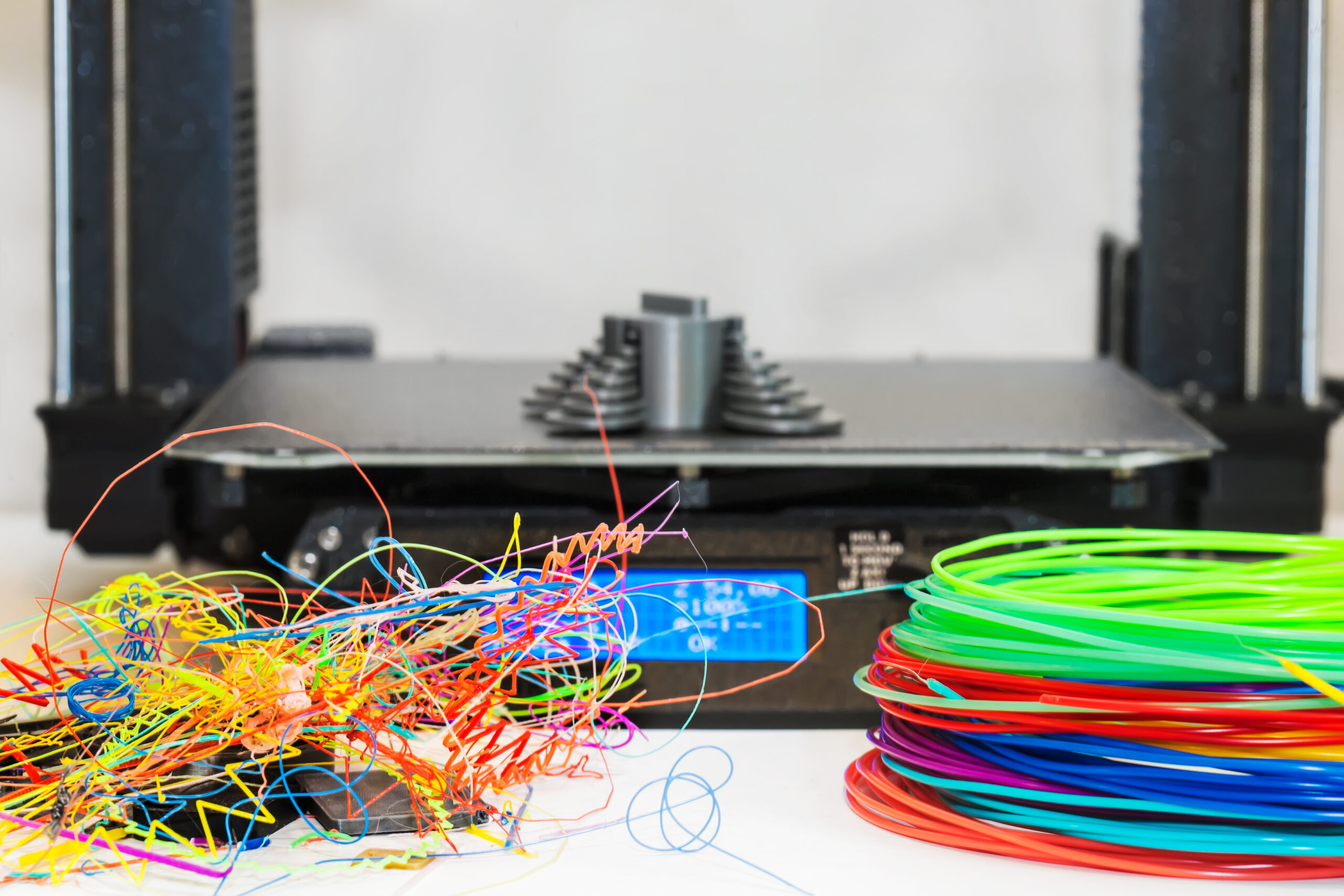
Polyethylene as a Material for Additive Manufacturing (AM): A Material with Material Recycling Suitability
Polyethylene (PE) is a material that exhibits low thermal degradation and is suitable for recycling.
As the demand for reusing waste materials generated in additive manufacturing (AM) , also known as 3D printing, including material extrusion–based processes such as FDM and MEX, continues to increase, Japan Polyethylene provides polyethylene materials for additive manufacturing (3DPE Series) that combine excellent printability with high recyclability.
Introduction: Demand for Material Recycling in Additive Manufacturing
In additive manufacturing, the demand for reusing waste materials and support materials generated during the printing process has been increasing year by year.
This trend is driven not only by rising material costs but also by growing societal demands for resource circulation. In some cases, failed prints and support materials can account for several tens of percent of the total material used in additive manufacturing, resulting in significant material loss. Under these circumstances, material extrusion–based additive manufacturing, one of the representative additive manufacturing methods, offers advantages from the perspective of the materials used.
In material extrusion–based additive manufacturing, thermoplastic resins are used, which can be melted by heating and reshaped. Because these thermoplastic resins are suitable for material recycling, waste materials and support materials generated during the printing process can be crushed and pelletized and then recycled as raw materials.
In other words, there is potential to achieve reduction of material loss and cost optimization through the recycling of waste materials. What challenges, then, exist in material recycling for materials used in material extrusion–based additive manufacturing?
Challenges of Materials Used in Material Extrusion–Based Additive Manufacturing
While circulating materials through material recycling can contribute to reducing material loss and optimizing costs, there is a challenge in that repeated heating can cause material degradation, leading to changes in material properties. In addition, the degree of this degradation varies depending on the type of material. In material extrusion–based additive manufacturing, PLA and ABS are widely used as representative materials.
However, these materials are prone to degradation caused by repeated heating, which can result in a reduction in mechanical strength and changes in melt flow behavior. PLA is susceptible to hydrolysis and thermal degradation, while ABS tends to undergo changes in molecular structure when repeatedly heated, making a decrease in impact strength more likely. As a result, both materials tend to exhibit changes in material properties when recycled.
Polyethylene Suitable for Material Recycling in Material Extrusion–Based Additive Manufacturing
Polyethylene is considered one of the materials suitable for material recycling, as its material properties are less likely to change even after repeated heating, making it easy to use as recycled material. On the other hand, conventional polyethylene has a highly crystalline structure and has therefore been regarded as unsuitable for additive manufacturing for the following reasons:
- Warping:
A phenomenon in which the bottom surface of a printed part lifts off from the print bed - Deformation and cracking:
Occurrence caused by internal stress resulting from shrinkage - Reduced dimensional accuracy:
Shrinkage causes the dimensions of printed parts to deviate from the designed values
At Japan Polyethylene, polyethylene suitable for material extrusion–based additive manufacturing was developed using proprietary molecular design technology.
This technology suppresses warping and cracking while improving dimensional stability during printing. As a result, the 3DPE Series has been developed as polyethylene grades for additive manufacturing that achieve both material recycling suitability and good printability.
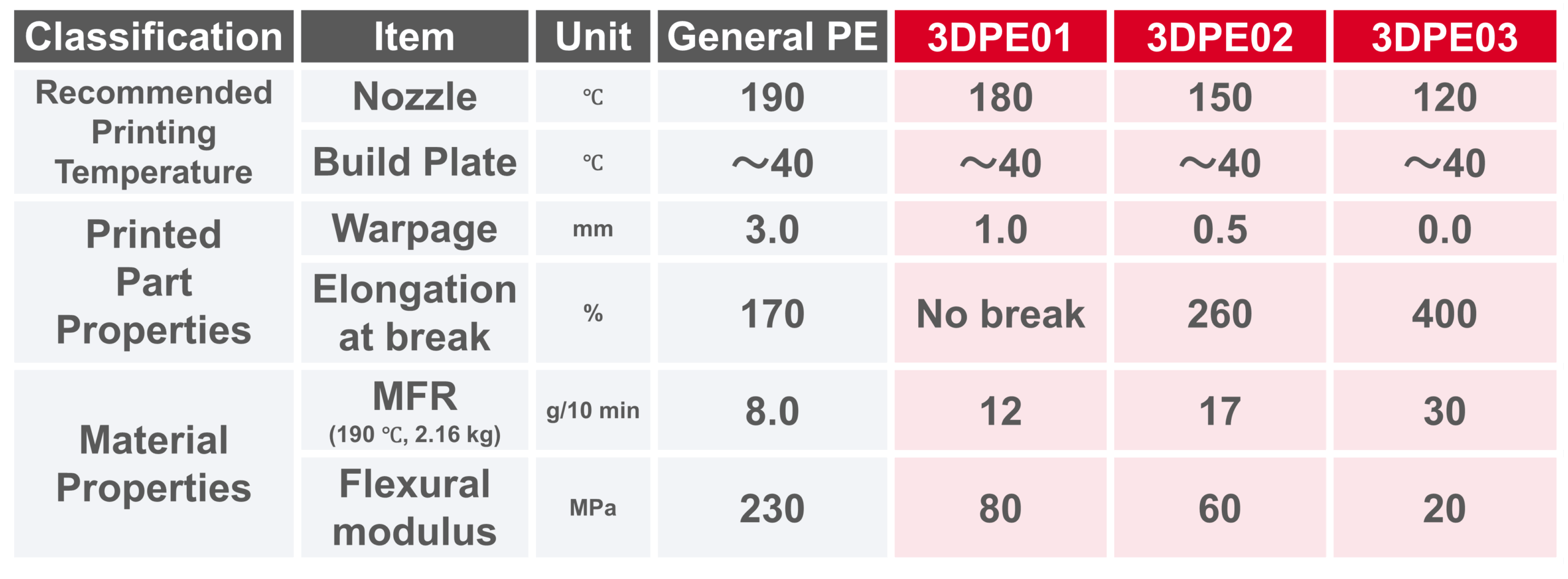
Table 1. Polyethylene Grades for Additive Manufacturing: “3DPE” Series
Changes in Material Properties During Material Recycling–Using Polyethylene Grades for Additive Manufacturing (3DPE Series)
To evaluate material recycling suitability, verification tests were conducted using 3DPE02. Two types of samples were prepared and evaluated as shown in Table 2.
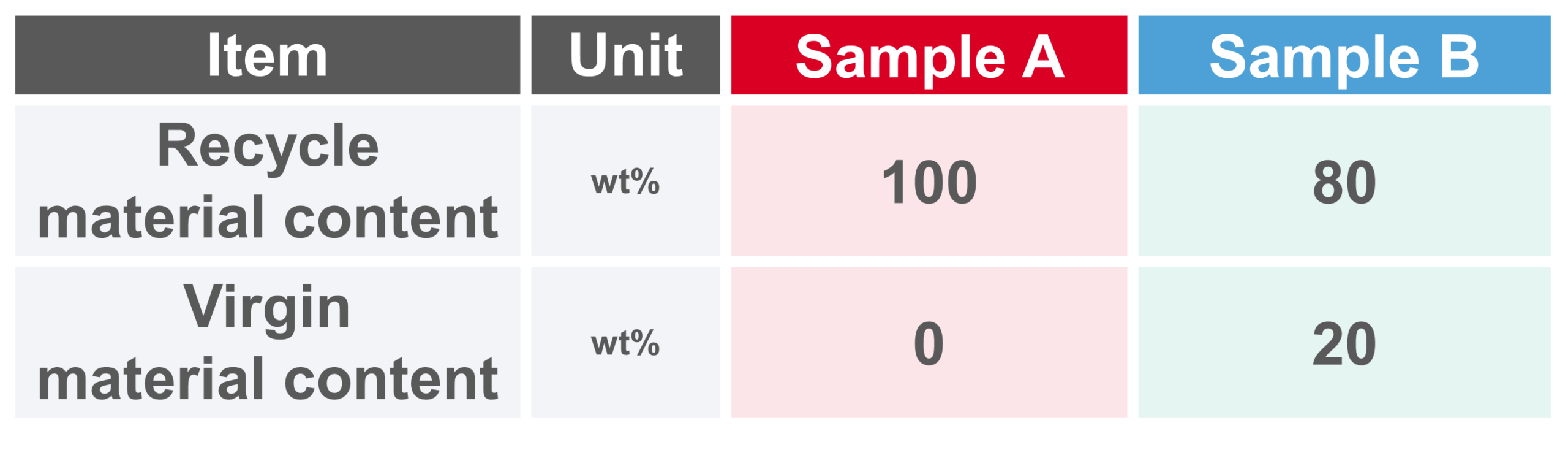
Table 2. Samples Prepared Using 3DPE02
Sample Conditions
The evaluation was conducted on the following two samples.
Sample A:
Material recycling ratio: 100%
Condition: Only recycled waste material of 3DPE02 was recycled
Sample B:
Material recycling ratio: 80%
Condition: Virgin 3DPE02 was added to the recycled waste material at each re-melt compounding step
Evaluation Procedure
The evaluation was conducted according to the following steps:
Step 1:
Printed parts were produced using a material extrusion–based 3D printer .
Step 2:
The printed parts were crushed.
Step 3:
The crushed material was melt-kneaded using an extruder, with virgin material added as necessary, and then pelletized again.
Steps 1 through 3 were defined as one cycle. The material recycling ratio represents the weight percentage (wt%) of the crushed recycled material used in Step 3.
MFR Change Rate
The Melt Flow Rate (MFR) is an indicator of the flow properties of a resin in its molten state. Even under the condition where only recycled material was used (Sample A) , the MFR change rate remained at approximately 10% after 10 recycling cycles, indicating relatively stable behavior.
In contrast, in Sample B, where 20wt% of virgin material was added to the recycled material, the MFR change rate remained at approximately 10% even after 20 recycling cycles. Under this condition, the material can be used under the same printing conditions as virgin material (Figure 1) .
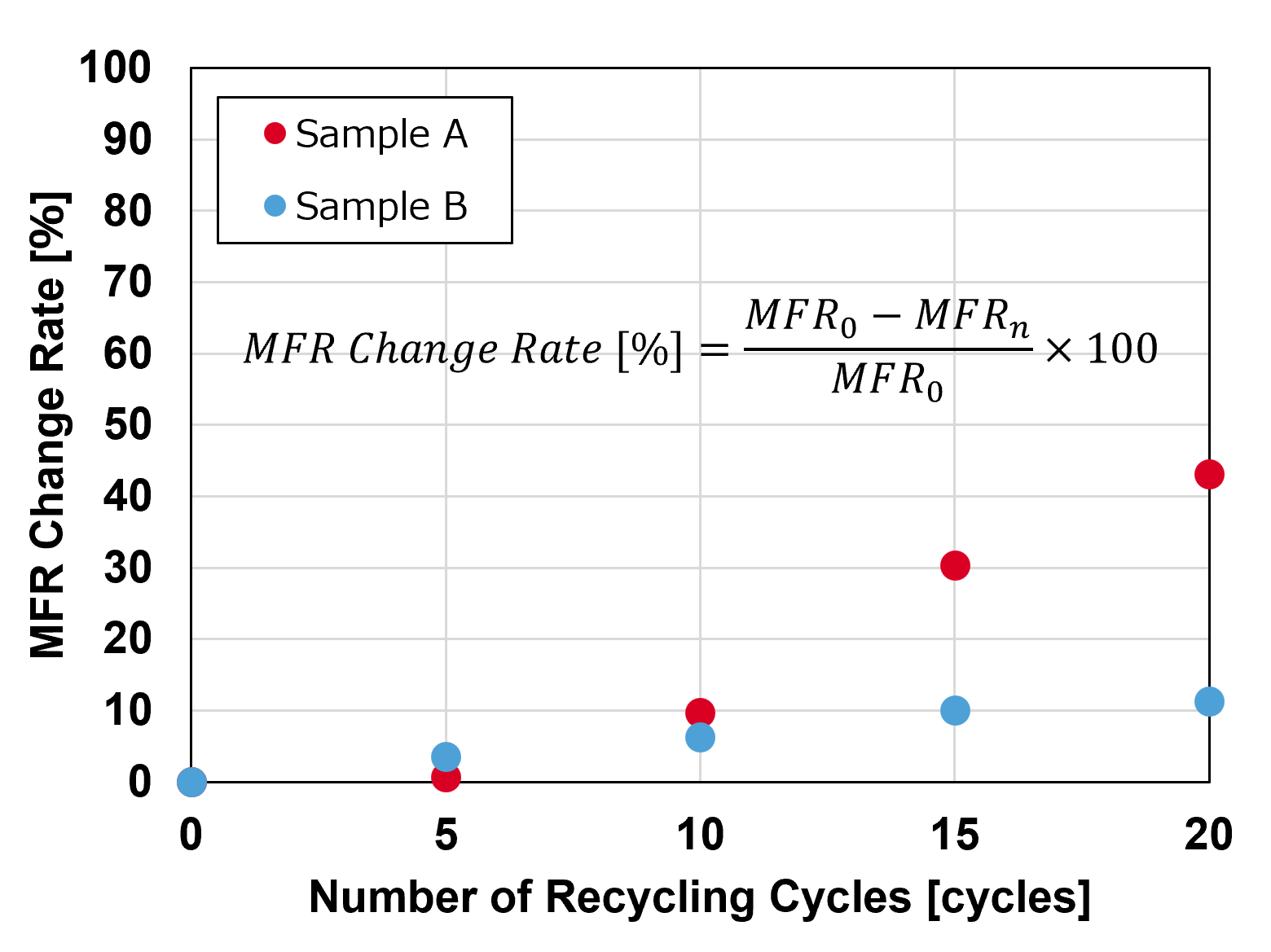
Figure 1. MFR Change Rate During Material Recycling
(MFR₀: MFR of the virgin material, MFRₙ: MFR after n recycling cycles)
Impact Strength
Under both material recycling conditions—100% and 80% recycling ratios—the material maintained impact strength equivalent to that of the virgin material even after 20 recycling cycles (Figure 2) . This is considered to be due to the fact that 3DPE02 has an appropriate level of flexibility and high impact resistance, as well as the inherent property of polyethylene, which is less prone to degradation during repeated recycling.
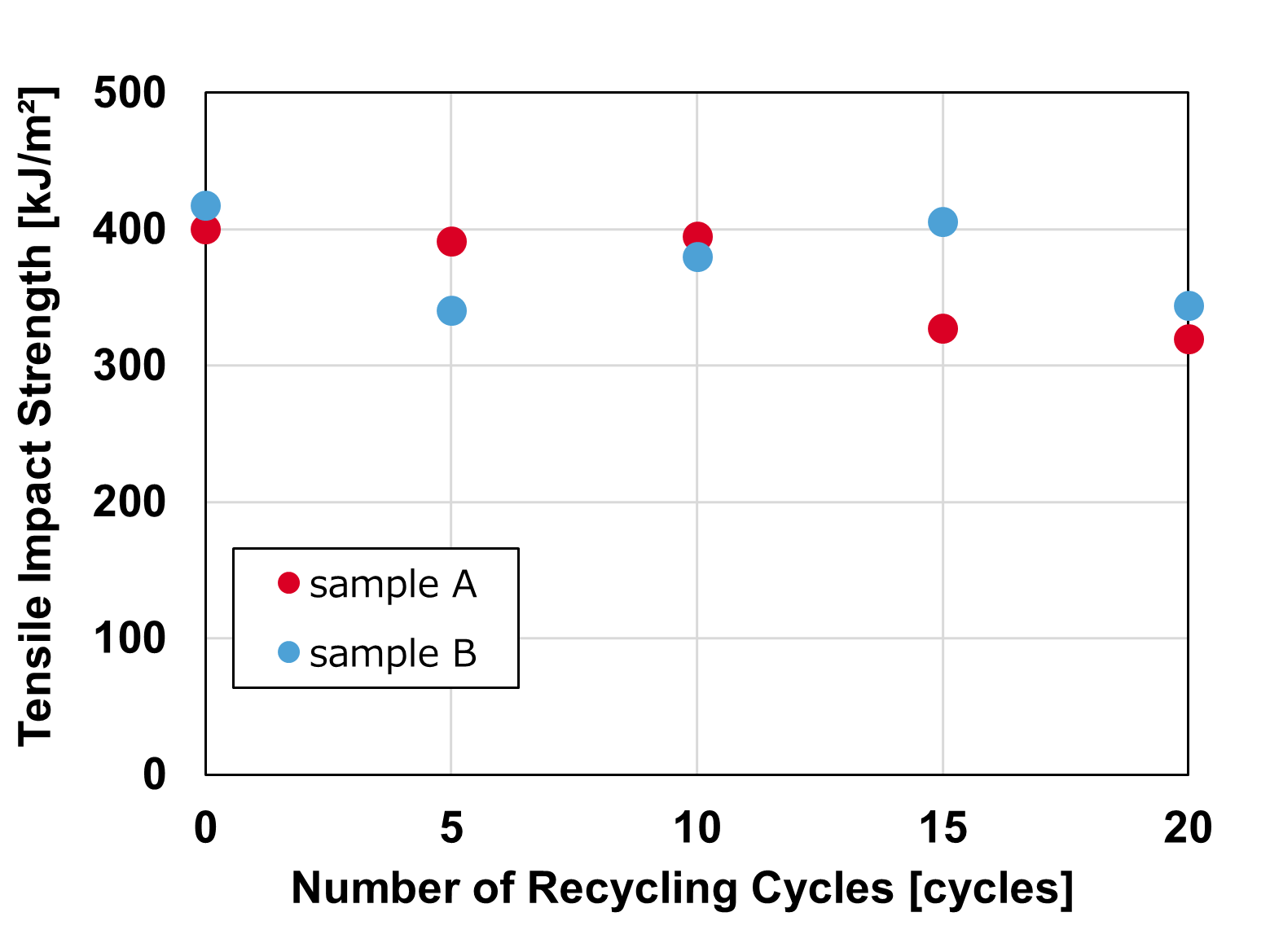
Figure 2. Comparison of Tensile Impact Strength
Change in Appearance Color
Under all conditions, only a slight change in appearance color was observed even after 20 recycling cycles (Figure 3, 4) .
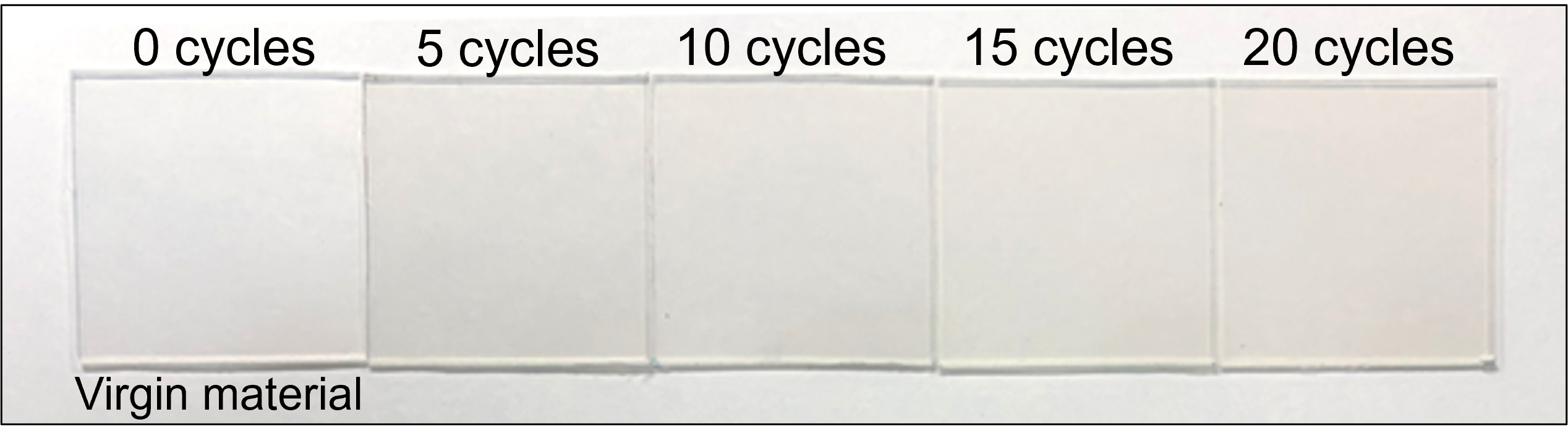
Figure 3. Change in Appearance Color of Sample A: Material Recycling Ratio 100%
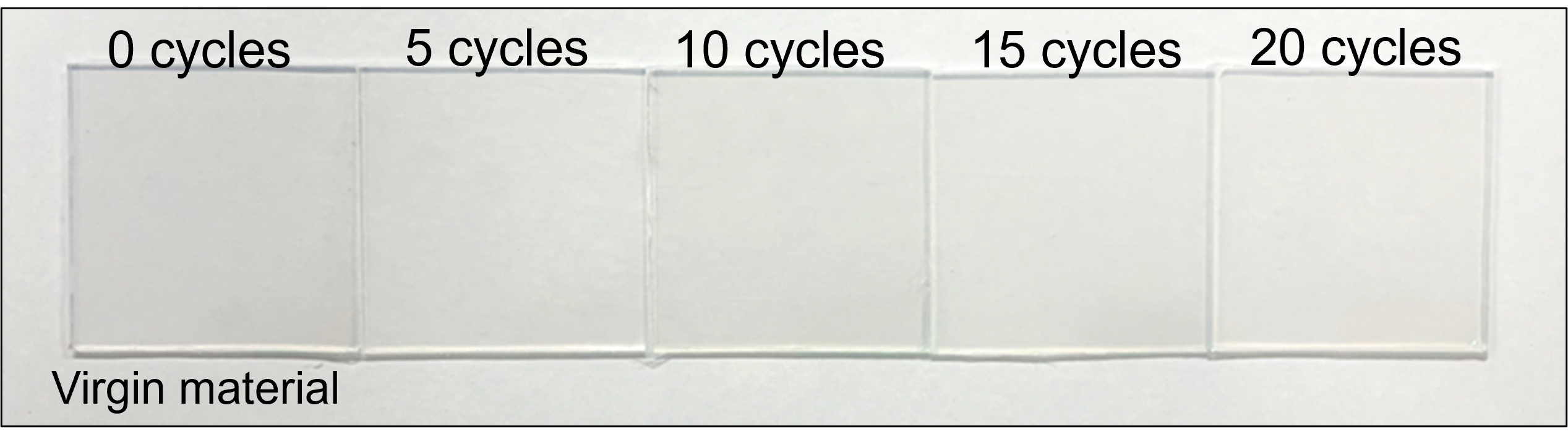
Figure 4. Change in Appearance Color of Sample B: Material Recycling Ratio 80%
Summary
In additive manufacturing, waste materials such as failed prints and support structures are generated, and therefore the demand for recycling has been increasing from the perspectives of reducing material loss and improving resource efficiency. PLA and ABS, which are mainly used in material extrusion–based additive manufacturing, are prone to changes in material properties due to repeated thermal exposure, and in some cases, property control may be required when these materials are recycled.
In contrast, polyethylene exhibits relatively small changes in material properties caused by heat and can more easily maintain its performance even after repeated recycling.
For this reason, polyethylene can be considered one of the materials suitable for material recycling.
Japan Polyethylene provides polyethylene materials for additive manufacturing (3DPE Series) that achieve a balance between printability and recyclability.


CONTACT
Please feel free to contact us for any work requests or consultations.
We will propose the best solution for our customers.
GROUP COMPANY

